
TLDR
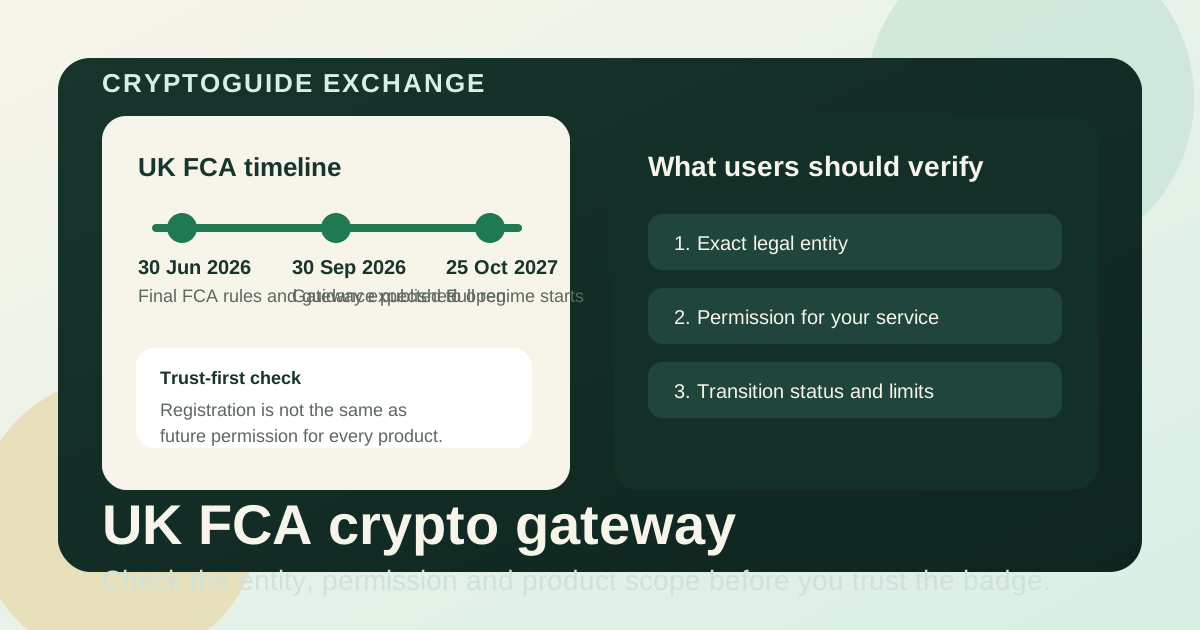
As of August 5, 2026, the UK's new crypto authorisation regime is not live yet, but the FCA says the gateway for applications is expected to open on September 30, 2026 and close on February 28, 2027. The full regime starts on October 25, 2027. That matters because the FCA also says there will be no automatic conversion from today's Money Laundering Regulations registration into the future FSMA authorisation regime. For exchange users, the practical question is simple: do not treat phrases like "UK compliant", "UK-ready" or even "FCA registered" as proof that every crypto service on a platform already carries the permission you think it does.
Key takeaways
- The FCA expects the authorisation gateway to open on September 30, 2026 and the application period to close on February 28, 2027.
- The new UK crypto regime is scheduled to commence on October 25, 2027.
- The FCA says firms registered under the Money Laundering Regulations will not convert automatically into the new FSMA permissions regime.
- Firms applying late may be pushed into a transitional state where they can service only pre-existing UK contracts, not new UK business.
- The FCA's own consumer tools say users should check whether a firm is authorised and has permission for the service they want, but those tools do not remove all risk or confirm every protection outcome.
- CryptoGuide Exchange is an independent research and comparison platform, not an exchange, broker, custodian, investment adviser or legal adviser.
What changed
The key shift is that the UK has moved from broad consultation talk to an operational timetable. On June 30, 2026, the FCA published final rules and guidance for firms that will be authorised under the new crypto regime. On July 8, it updated its gateway page with more application-form detail. The regulator's message is now concrete: firms that want to undertake the new regulated crypto activities will need the right FCA permission, and current MLR status alone is not enough.
That is a bigger deal for users than it first sounds. During transition periods, firms often market themselves with language that is technically true in one narrow sense and over-read in another. A platform may be registered for anti-money-laundering purposes today, preparing an application for tomorrow, and still not yet hold the exact future permission a user assumes covers spot trading, custody, staking, lending or another product line.
Who is affected
The immediate burden sits on firms operating trading platforms, intermediaries, staking services, custody flows and related crypto products that fall within the new UK regime. The user group most exposed to confusion is ordinary exchange customers who read "FCA" somewhere on a landing page and assume the whole app is already fully authorised under the incoming framework.
This matters especially for users who care about GBP access, local complaints paths, custody confidence or whether a platform can keep serving UK customers without interruption during the transition. It also matters for anyone comparing UK positioning against EU MiCA positioning. The labels are not interchangeable and the timing is different.
Decision checklist before trusting a "UK regulated" claim
- Check the exact legal entity, not only the brand name.
- Check whether the entity is merely MLR-registered today, already FSMA-authorised for another activity, or actually holds the relevant crypto permission once the new regime starts.
- Check whether the service you use is spot exchange access, custody, staking, lending, rewards or another product with a different regulatory path.
- Check whether the firm's claim appears in the FCA Firm Checker or Financial Services Register, not only in ad copy or influencer referrals.
- Check whether the firm is serving new UK customers freely, or whether later transition rules could limit it to pre-existing contracts.
- Check whether the platform clearly explains what happens if its application is rejected, delayed or narrowed.
Comparison table: what different UK status labels really mean
| Status label | What it can mean | What it does not automatically mean |
|---|---|---|
| FCA registered | The firm may be registered today under the Money Laundering Regulations. | It does not mean the firm automatically has future FSMA crypto permissions. |
| Applying to the FCA | The firm may be preparing or submitting an application through the gateway. | It does not mean approval is already granted or that all products will be approved. |
| FCA authorised | The firm may hold permission for some regulated activities. | It does not prove every crypto service in the app is covered by the same permission set. |
| UK ready or UK compliant | The firm may be aligning systems, controls or legal structure for the coming regime. | It is not a formal regulatory category and may tell you very little on its own. |
| Using a transitional route | The firm may still be operating while an application is determined or while winding down legacy exposure. | It does not guarantee the firm can sign up new UK customers for every product. |
What the FCA timeline means in practice
The dates are specific. The FCA's gateway page says the application period is expected to run from September 30, 2026 to February 28, 2027. Its broader regime pages say the full UK crypto regime starts on October 25, 2027. That gives firms time to prepare, but it also creates a long window in which marketing language can outrun legal reality.
The most important sentence for users is the one many people will never read: the FCA says there will be no automatic conversion for firms already registered under the MLRs. In other words, "we were already on the UK's radar" is not the same as "we now hold the permission needed for this crypto service under the new regime."
The transition mechanics matter too. The FCA says firms that apply during the application period may be able to continue providing services while an application is being determined. Firms that apply outside the application period face stricter limits and may be able to perform only what is necessary for pre-existing contracts, without entering new contracts with existing or new UK customers. For users, that can translate into sign-up changes, product shutdowns or regional feature removals even before any dramatic enforcement headline appears.
Risk notes
Regulatory halo risk is real
Users often compress several different claims into one comforting story: the firm is in the UK, the firm mentions the FCA, the firm is therefore fully regulated for everything I use. The FCA's own pages argue against that shortcut. You still need to verify the permission and the service scope.
Consumer tools help, but they are not complete proof
The FCA Firm Checker says it can help users see whether a firm is authorised and has permission for the services they want. The same page also says it will not remove all risk, may not show every relevant detail and cannot confirm whether compensation or ombudsman protection definitely applies if something goes wrong. Users should read those limits carefully.
Late applications can become user-facing friction
If a firm leaves its UK application late or gets a narrower outcome than expected, users may encounter halted onboarding, product segmentation, stricter documentation checks or withdrawal-only periods for some services. That kind of friction can appear operational before it becomes a headline.
CryptoGuide take
The useful signal here is not hype about Britain becoming "crypto-friendly" or "crypto-tough." The useful signal is that the FCA has put real dates, real application mechanics and real limits on the table. That should raise the user standard. If a platform wants UK trust, it should explain exactly which entity serves you, what permission it has now, what permission it is applying for, and whether every product you touch sits inside the same perimeter. Calm specificity is more trustworthy than a banner that just says "regulated."
FAQ
When does the FCA crypto gateway open in the UK?
The FCA says it expects the crypto authorisation gateway to open on September 30, 2026 and the application period to close on February 28, 2027.
Does an FCA-registered crypto firm automatically become authorised under the new UK regime?
No. The FCA says there will be no automatic conversion from the current Money Laundering Regulations registration into the new FSMA authorisation regime. Firms will need to secure the relevant permission or variation of permission.
What should UK crypto exchange users verify first during the gateway transition?
Verify the exact legal entity, whether it already has the permission needed for the service you use, whether it is still applying or relying on a transitional route, and whether the claim appears in the FCA Firm Checker or Financial Services Register rather than only in marketing copy.
Conclusion
The UK gateway story is not really about one opening date. It is about whether users can tell the difference between registration, application, permission and product scope before a platform asks for deposits. The closer the FCA moves toward September 30, 2026, the more valuable that distinction becomes.
Related pages
- MiCA after July 1, 2026: what EU crypto exchange users should check
- Bank of England stablecoin rule reset: what exchange users should check
- How to verify a legitimate exchange
- Crypto regulation in Europe
- Run a trust check
Sources
- FCA: Cryptoassets - how the gateway will operate
- FCA: A new regime for cryptoasset regulation
- FCA: Cryptoasset regulated activities, FSMA and the FCA Handbook
- FCA: Pre-application meetings from May 11, 2026
- FCA Firm Checker
- FCA: Overview of our cryptoassets regime policy statements
- FCA: Guidance on the UK's future crypto regime