
TLDR
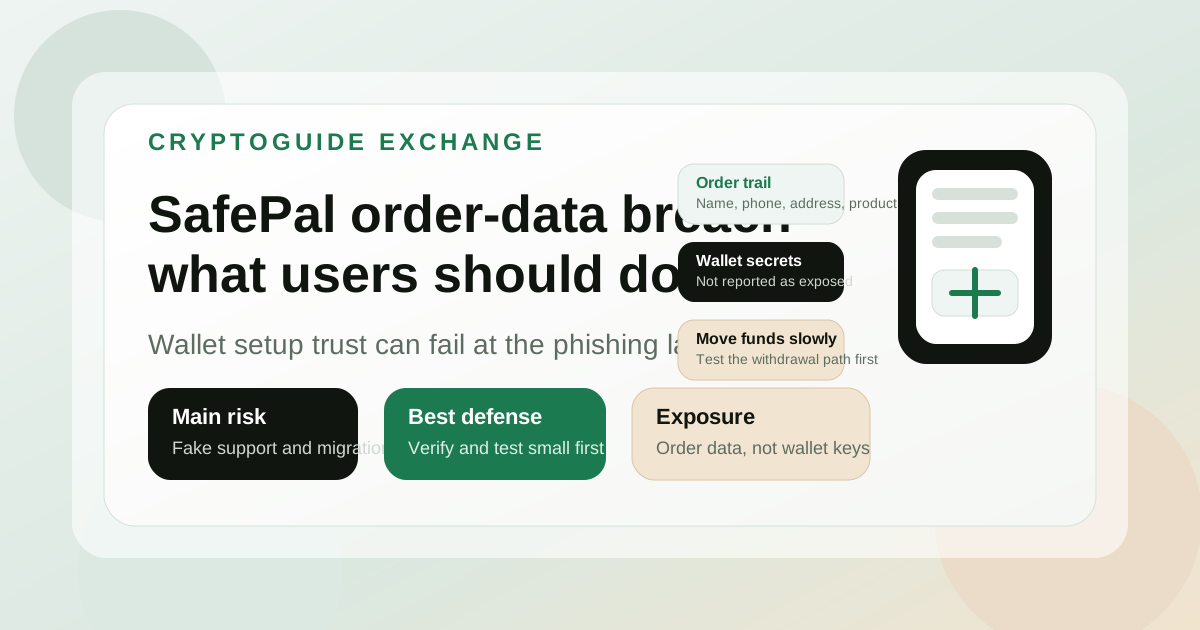
SafePal said on August 16, 2026 that a compromised third-party order-tracking plugin exposed 39,798 customer order records covering purchases from August 11, 2023 to August 7, 2026. SafePal said no private keys, seed phrases, passwords, payment-card details or transaction history were exposed. That is the technical relief. The practical risk is still serious: attackers can now use real wallet-order context to make phishing, fake support and "urgent migration" messages look legitimate. If you use SafePal and also keep funds on an exchange, the right move is not panic withdrawal. It is tighter verification, staged transfers and zero trust toward unsolicited contact.
Key takeaways
- SafePal said the incident came from a third-party order-tracking plugin that was compromised on August 10, 2026.
- The company said 39,798 order records were affected, covering orders placed between August 11, 2023 and August 7, 2026.
- Exposed fields included customer name, phone number, shipping address and purchased product information.
- SafePal said no seed phrases, private keys, passwords, transaction history, passport details or payment-card information were exposed.
- The highest user risk now is social engineering: fake support tickets, fake firmware or wallet migration prompts, and attacker-controlled withdrawal instructions.
- CryptoGuide Exchange is an independent research and comparison platform, not an exchange, broker, custodian, investment adviser or legal adviser.
What happened
According to SafePal's incident report, the breach did not start in its signing infrastructure or wallet software. It started in a third-party plugin used to track ecommerce orders. SafePal said it detected unusual activity after the plugin was compromised on August 10 and then disclosed the incident publicly on August 16.
The exposed dataset matters because it links identity and shipping information to crypto hardware purchases. A record showing that someone bought a SafePal device or accessory gives an attacker a credible story: they can pretend to be support, claim there is a firmware problem, invent a migration deadline or urge the customer to "secure" funds by moving them from an exchange to a wallet address the attacker controls.
How the attack flow works after a data leak
- A third-party ecommerce tool leaks real customer order details.
- Attackers match those details with phone, email, messaging or social-media profiles.
- They approach the target as SafePal support, an exchange risk team or a wallet-migration assistant.
- The message creates urgency: update firmware, verify a seed phrase, reconnect the wallet or move exchange funds immediately.
- The theft happens only if the user follows the fake flow, clicks the fake link or signs the wrong transaction.
What was exposed and what was not
| Category | SafePal said was exposed | SafePal said was not exposed |
|---|---|---|
| Order identity data | Name, phone number, shipping address and purchased product information. | Proof that every SafePal user or app-only user was affected. |
| Wallet secrets | No direct wallet secrets disclosed. | Private keys, recovery phrases and passwords. |
| Financial records | No transaction history disclosed. | Payment-card details, passport data and wallet transaction history. |
| User risk | More credible phishing, fake support and fake migration outreach. | Automatic access to assets from the leaked order records alone. |
Why this matters for exchange users too
Many users move between a centralized exchange and a hardware or mobile wallet in the same week. That makes order-data leaks more dangerous than they look. An attacker does not need exchange credentials if they can persuade a user to make the transfer for them. A believable message saying "your SafePal setup is at risk, move funds now" can be enough to turn exchange withdrawals into attacker deposits.
This is also a trust-model lesson. A wallet can still protect key custody while the surrounding logistics stack creates new exposure. For exchange users, self-custody is still a valid goal. It just needs a slower handoff and better channel verification than marketing headlines suggest.
User checklist now
| Check | Why it matters | What to do |
|---|---|---|
| Inbound contact | Attackers now have context that makes fake outreach sound real. | Treat every SafePal or exchange call, email, Telegram DM or text as hostile until verified through the official app or bookmarked website. |
| Seed phrase handling | The likely scam goal is still the recovery phrase or a malicious signature. | Never type a seed phrase into a website, chat, form or desktop pop-up, even if the sender knows your order details. |
| Exchange withdrawals | Urgent full-balance transfers raise the cost of one mistake. | If you need to move funds, send a small test withdrawal first and confirm the address on the wallet screen itself. |
| Wallet software path | Fake update or migration prompts are a common post-breach tactic. | Only update SafePal software from official app-store listings or the official SafePal website you typed or bookmarked yourself. |
| Address hygiene | Shipping data creates a real-world privacy issue, not just an inbox issue. | Reduce public posting about holdings, device ownership and storage habits; keep your wallet procurement details separate from public profiles where possible. |
| Exchange defenses | A phishing success often ends with an exchange withdrawal. | Enable withdrawal address allow-listing, the strongest available 2FA and login alerts on every exchange you use. |
Risk notes users should not miss
No private-key leak does not mean low risk
SafePal's disclosure draws an important line between order data and wallet secrets. That line matters technically, but social-engineering losses usually happen because a user was rushed, not because a key was directly stolen from a vendor database.
The purchased product field makes the scam more tailored
Knowing which SafePal product a person bought can help an attacker script a more specific fake support story. That usually improves scam conversion because the message sounds operational, not generic.
Self-custody still makes sense, but the process matters more now
The wrong response is either blind panic or blind brand loyalty. The better response is to tighten the movement path between exchange custody and self-custody, document your official support paths and slow down any transfer that starts with unsolicited urgency.
How SafePal responded
SafePal said it disabled the affected plugin, started a security investigation, notified affected customers and published an FAQ explaining what data categories were and were not involved. On its scam-protection page, the company also reminded users that it does not store private keys or seed phrases and said customers should avoid clicking links from search ads, comments or unofficial social-media accounts. Those are constructive steps, but users should still assume follow-on phishing attempts will continue for some time after the disclosure.
CryptoGuide take
SafePal's incident is a good reminder that crypto security is rarely one system. Wallet cryptography can remain intact while the ecommerce layer leaks enough context to make scams work better. The trust-first response is simple: do not let a wallet-brand message, a breach headline or a support warning rush your exchange withdrawals. Verify through your own saved channels, move small test amounts first and treat procurement privacy as part of wallet security.
FAQ
Was the SafePal incident a wallet or private-key hack?
No. SafePal said the incident involved a compromised third-party order-tracking plugin and exposed ecommerce order data, not private keys, seed phrases, passwords or transaction history.
What customer data was exposed in the SafePal breach?
SafePal said 39,798 order records from August 11, 2023 to August 7, 2026 were affected, including customer names, phone numbers, shipping addresses and purchased product details.
Why should exchange users care about a wallet order-data breach?
Because attackers can use wallet-order details to send more convincing fake support messages, fake migration prompts or urgent withdrawal instructions that push users to move funds from exchanges into attacker-controlled wallets.
Conclusion
The SafePal breach did not show a broken wallet. It showed how fast a side-channel data leak can become a funds-at-risk event once phishing enters the picture. For exchange users and self-custody users alike, the next upgrade is disciplined verification, not faster movement.
Related pages
- Trezor shipping-provider breach: what self-custody users should do now
- Exchange withdrawal protection in 2026
- How to avoid crypto scams
- What is a crypto wallet?
- Run a trust check