
TLDR
Trezor said on August 13, 2026 that a breach at shipping provider ShipMonk exposed order data for 11,742 customers and partial data for another 1,947. Trezor said its own systems were not compromised and devices remained secure, but that affected users could face more sophisticated phishing. The trust-first lesson is broader than phishing alone: self-custody protects private keys, but it does not remove privacy, logistics or human-targeting risk. If you are moving meaningful balances from an exchange to a hardware wallet, slow down and review your contact-channel, delivery-address, backup-storage and withdrawal habits as one security system.
Key takeaways
- The incident was disclosed on August 13, 2026 after ShipMonk notified Trezor on August 10 about unauthorized access to systems containing customer order data.
- Trezor and follow-up reporting said the affected group included customers in the U.S., U.K., Sweden, Colombia, Brazil, Italy and Portugal who received orders between May 10 and August 8, 2026.
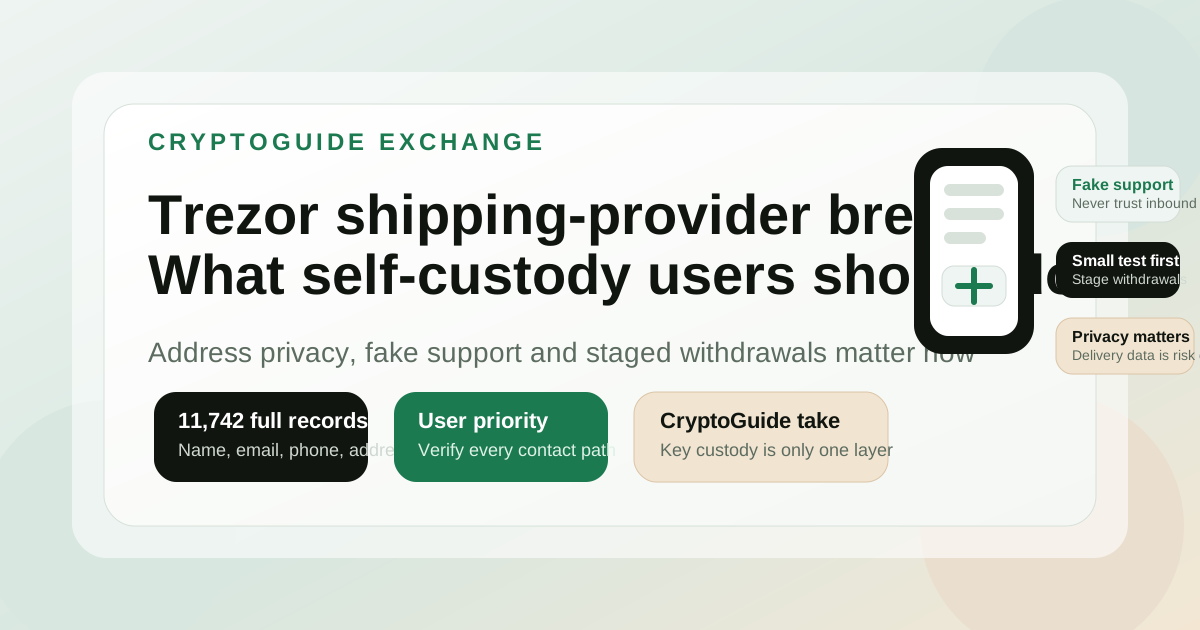
- Trezor said 11,742 customers had full exposure of name, email, phone number and shipping address, while 1,947 had partial exposure of name, city and email.
- Trezor said its own systems and devices remained secure, but warned that exposed customers could face phishing, fake calls, fraudulent letters and impersonation attempts.
- Trezor's own privacy pages show why the scope was limited: order and delivery data is stored for 90 days, then deleted from Trezor and the fulfillment partner's systems unless exceptions apply.
- CryptoGuide Exchange is an independent research and comparison platform, not an exchange, broker, custodian, investment adviser or legal adviser.
What happened
The immediate facts are straightforward. BleepingComputer reported that Trezor said ShipMonk informed it on Monday, August 10, 2026 that an unauthorized party had accessed systems holding customer data. On August 13, Trezor disclosed the breach publicly and said the exposed data covered recent orders rather than old lifetime customer history because of its 90-day retention window.
The deeper point is what kind of customer this data identifies. A hardware-wallet order can imply more than ordinary ecommerce activity. It can signal that the buyer holds crypto, values self-custody and may eventually move assets off an exchange into a device tied to a real-world address. That is why a logistics breach matters even when the wallet itself is uncompromised.
How the attack flow worked
- A third-party logistics provider held customer delivery records needed for recent Trezor orders.
- An unauthorized party accessed those external systems rather than Trezor's own wallet infrastructure.
- The stolen records linked real identities and contact details to hardware-wallet purchases.
- Attackers or imitators can now use that context for better phishing, fake support outreach, bank impersonation or pressure tactics tied to self-custody anxiety.
- The highest practical risk is not the device itself. It is a user making a bad decision because the attacker sounds informed and urgent.
What was exposed and what was not
| Category | Exposed | Not disclosed as exposed |
|---|---|---|
| Order identity data | Name, email, phone number and shipping address for 11,742 customers; name, city and email for 1,947 others. | Proof that every past Trezor buyer was affected. |
| Wallet security | No direct wallet access disclosed. | Recovery seeds, private keys and device cryptography. |
| Trezor systems | No compromise of Trezor's own systems disclosed. | Evidence of a breach inside Trezor Suite or device-management infrastructure. |
| User risk | More credible phishing, impersonation and privacy exposure. | Automatic theft of onchain funds from the leaked records alone. |
Why this matters for exchange users moving into self-custody
Exchange users often treat the custody decision as a simple trade: exchange risk versus self-custody risk. This breach is a reminder that the real model is broader. Self-custody can sharply reduce exchange counterparty exposure, but it also creates new operational surfaces: shipping, setup, backup storage, social engineering and real-world privacy.
That does not make the exchange a safer default. It means the handoff from exchange custody to self-custody deserves more planning than "buy device, withdraw funds, done." A hardware wallet protects signing keys. It does not stop a scammer from calling with your name and address, or rushing you into typing a wallet backup into the wrong place.
User checklist now
| Check | Why it matters | What to do |
|---|---|---|
| Inbound messages | Attackers now have enough context to sound legitimate. | Treat every call, text, email or letter about your wallet as hostile until verified through Trezor's official site or app paths. |
| Wallet-backup handling | The likely scam goal is still your seed or backup words. | Never enter your wallet backup on a website, form or message prompt, even if the sender knows your order details. |
| Exchange-withdrawal pacing | Large rushed transfers raise the cost of one mistake. | Rehearse your wallet setup with a small onchain test before moving your full exchange balance. |
| Home-address privacy | A shipping address tied to crypto hardware is sensitive information. | Reduce public sharing of holdings, delivery details and storage habits; separate online identity from real-world custody details where possible. |
| Backup storage | Self-custody fails if backup handling is casual. | Review where recovery materials live, who could find them and whether your storage choices make sense if phishing pressure rises. |
| Support trust model | Support impersonation works best during device setup or migration stress. | Use bookmarked official pages and do not follow setup or migration instructions from unsolicited outreach. |
Risk notes users should not miss
Self-custody relocates risk rather than eliminating it
FT quoted TRM Labs saying self-custody relocates risk rather than eliminates it. That is the right frame here. Hardware wallets are still valuable. The mistake is assuming offline key storage solves every surrounding trust problem.
Address privacy is now part of the wallet decision
Trezor's privacy pages emphasize limited retention and device-user separation, which are good design choices. But once a logistics partner is involved, delivery data becomes part of the attack surface. For serious self-custody users, procurement privacy is not a niche concern anymore.
Do not let this incident push you back into blind exchange trust
The wrong conclusion would be to leave everything on an exchange because self-custody sounds messy. Exchange risk remains real. The better conclusion is that moving off an exchange should be deliberate, documented and tested, not emotional or hurried.
How Trezor responded
Trezor's support and privacy materials help explain both the limits and the follow-up. The company says order and delivery data is stored for 90 days and then deleted from both its own and the fulfillment partner's systems, unless an exception applies. FT also reported that Trezor plans to introduce an anonymous delivery option across the EU by September 2026 and that, as of the report, it was not aware of a confirmed scam, hack or customer-safety threat resulting from this exposure.
Those are constructive steps, especially the retention policy and planned anonymous-delivery option. They do not undo the incident. They do show that logistics privacy is becoming a first-class product issue for hardware-wallet providers.
CryptoGuide take
The hype version of self-custody says a hardware wallet solves the trust problem. The trust-first version is calmer: a hardware wallet solves one critical part of the problem, key custody, while leaving human security, address privacy and operational discipline to the user. After the Trezor breach, the right habit is not panic and not complacency. It is process. Verify every message, stage exchange withdrawals, protect your backup flow and treat procurement privacy as part of custody quality.
FAQ
Was the Trezor breach a wallet or device hack?
No. Trezor and follow-up reporting said the incident involved unauthorized access at shipping provider ShipMonk, not a compromise of Trezor devices, wallet backups or Trezor's own systems.
What customer data was exposed in the Trezor incident?
Trezor said 11,742 customers had full exposure of name, email, phone number and shipping address, while 1,947 had partial exposure of name, city and email. The company said the affected customers were in the U.S., U.K., Sweden, Colombia, Brazil, Italy and Portugal.
What should self-custody users do after a shipping-data breach?
Treat unsolicited contact as hostile, verify every support interaction through official channels, protect home-address privacy where possible, review physical wallet-backup storage, and do not rush large exchange withdrawals until your device setup and withdrawal path are fully rehearsed.
Conclusion
The Trezor incident did not prove that hardware wallets are broken. It proved that self-custody depends on more than cryptography. For users leaving exchange custody, the next security upgrade is not another slogan. It is a tighter process around privacy, setup, backups and verification.
Related pages
- When to buy a hardware wallet
- How to store crypto safely
- What is a crypto wallet?
- How to avoid crypto scams
- Run a trust check