
TLDR summary
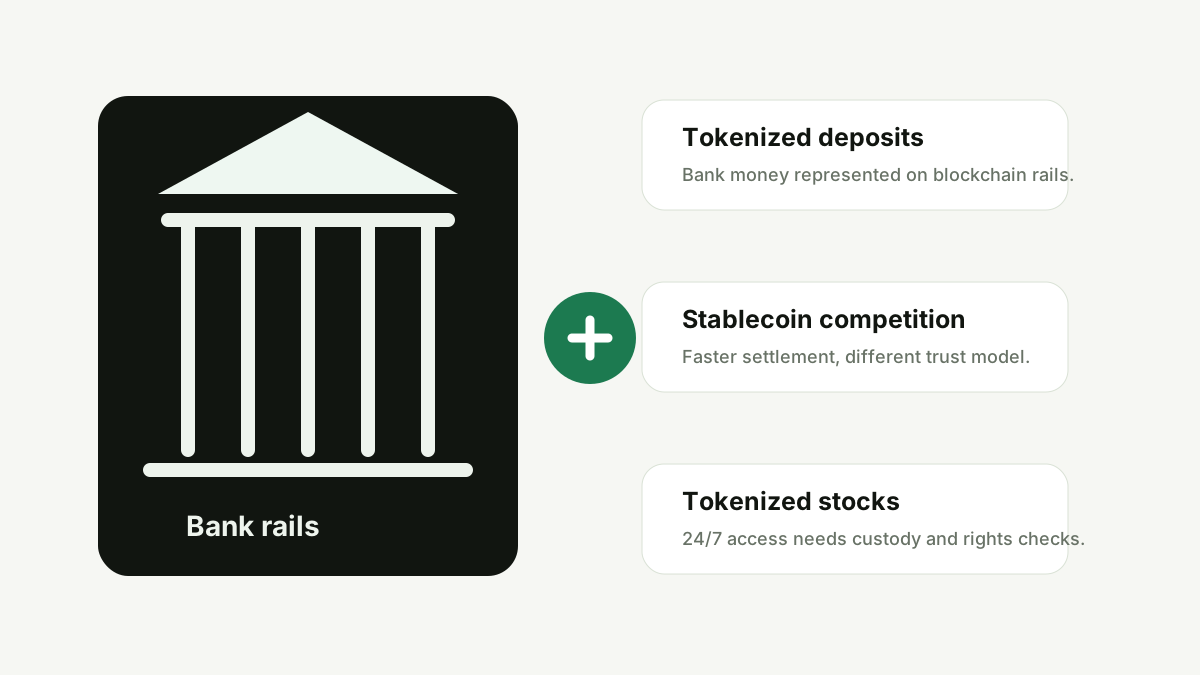
Wall Street is no longer watching crypto from the sidelines. Large banks and market operators are exploring tokenized deposits, stablecoin competition, tokenized stocks and 24/7 settlement rails. This can make crypto infrastructure feel more institutional, but it also creates new comparison problems: users must understand whether they are holding a stablecoin, a tokenized bank deposit, a tokenized stock claim or a normal exchange balance.
Key takeaways
- Traditional finance is moving toward blockchain-style settlement, not only bitcoin exposure.
- Tokenized deposits and stablecoins can look similar in user experience but differ legally and structurally.
- Tokenized stocks may not provide the same rights as ordinary shares.
- Institutional adoption can improve trust signals, but it does not remove counterparty risk.
- Users should compare custody, redemption, fees, rights, regulation and liquidity before trusting a platform.
Why this topic is trending
Recent reporting shows a broader shift in traditional finance. Axios described Wall Street firms embracing crypto services they once treated as a threat, driven by demand for digital assets, stablecoins, tokenization and extended-hours markets. The Wall Street Journal reported that major U.S. banks are planning a tokenized deposit network for faster settlement. Business Insider covered the SEC's reported interest in tokenized stock trading through an innovation exemption.
Put together, these signals point to one trend: crypto is becoming market infrastructure, not only a speculative asset class.
What are tokenized deposits?
A tokenized deposit is a traditional bank deposit represented on blockchain-style rails. Unlike many stablecoins, it is usually designed to remain a bank liability. That means the trust model is closer to regulated banking than to a private stablecoin issuer, although the exact details depend on the product, jurisdiction and network.
Tokenized deposits vs stablecoins
| Feature | Tokenized deposits | Stablecoins |
|---|---|---|
| Issuer model | Typically bank-issued or bank-network based. | Usually issued by a stablecoin company or protocol. |
| Claim type | Often linked to a bank deposit claim. | Usually a redemption claim against reserves or protocol collateral. |
| Best fit | Institutional settlement, treasury operations, bank rails. | Crypto trading, payments, DeFi, cross-platform liquidity. |
| Main user question | Which bank, network and legal rights apply? | What backs the token and how can it be redeemed? |
What are tokenized stocks?
Tokenized stocks are digital representations of equity exposure. The promise is faster settlement, broader access and potentially 24/7 trading. The risk is that a tokenized stock is not automatically the same as a normal share in a brokerage account. Voting rights, dividends, custody, redemption, fees and jurisdiction can vary.
Why crypto users should care
As more traditional finance products enter crypto-style rails, users will see products that look simple on the surface but carry different legal and operational assumptions. A platform may advertise tokenized stocks, stablecoin rails or bank-backed tokens, but the real question is what the user owns, who holds the underlying asset and what happens during stress.
Decision checklist before using tokenized finance products
- Identify the product type: stablecoin, tokenized deposit, tokenized stock or exchange balance.
- Check the issuer, custodian and redemption rights.
- Read whether holders receive voting rights, dividends or only price exposure.
- Compare fees, spreads, withdrawal limits and supported jurisdictions.
- Verify whether the product is available legally in your country.
- Do not assume a familiar bank or exchange brand removes all risk.
How this affects exchange comparison
Exchange research now needs more than spot trading fees. Users should compare whether a platform supports fiat rails, stablecoins, tokenized assets, proof-of-reserves, regulated custody, bank partnerships and transparent disclosures. The best platform for buying bitcoin may not be the best platform for tokenized stocks or bank-style settlement.
Sources and further reading
- Axios: Wall Street embraces crypto it once feared
- Wall Street Journal: Big banks plan tokenized deposit system
- Business Insider: SEC plan for tokenized stock trading
FAQ
What are tokenized deposits?
Tokenized deposits are traditional bank deposits represented on blockchain-style rails. They are usually different from stablecoins because the claim remains tied to a bank deposit model.
Are tokenized stocks the same as owning shares?
Not always. Tokenized stock products can differ in voting rights, dividends, custody, redemption and jurisdiction. Read the product terms before assuming they match ordinary shares.
Does Wall Street adoption make crypto platforms safer?
It may improve infrastructure and disclosure in some areas, but users still need to compare custody, regulation, fees, liquidity, product rights and counterparty risk.
Conclusion
Wall Street entering crypto is a major trust signal for the market, but it also makes product comparison more important. The next wave of crypto users may not only choose between exchanges. They may choose between stablecoins, tokenized deposits, tokenized stocks and hybrid bank-exchange platforms. The winning habit is to verify what the product actually represents before using it.