
TLDR summary
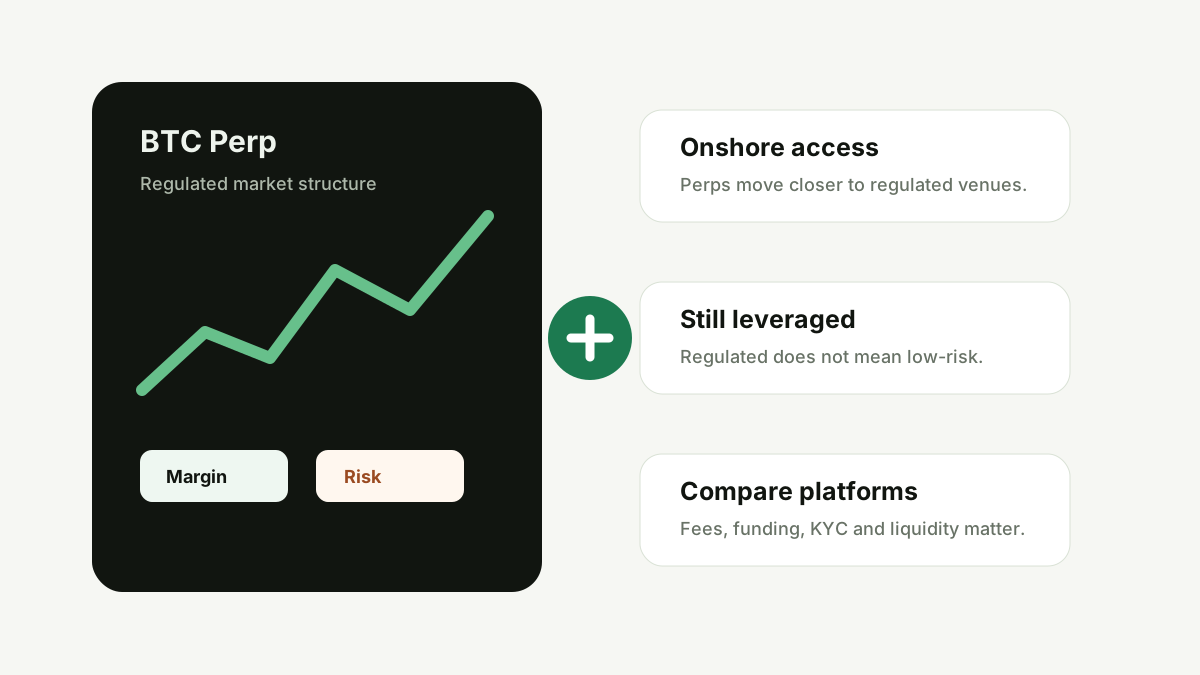
Regulated crypto perpetual futures are becoming one of the biggest U.S. crypto market stories of 2026. CFTC actions around Kalshi and Coinbase suggest that bitcoin and other digital-asset perps may move from offshore-first venues toward regulated domestic access. For users, the key point is balance: regulated venues can improve transparency and oversight, but perpetual futures remain leveraged derivatives with liquidation, funding and margin risk.
Key takeaways
- Perpetual futures are crypto derivatives without a fixed expiry date.
- They can be useful for hedging and active trading, but they can also liquidate positions quickly.
- CFTC-related approvals make U.S. regulated access more realistic.
- Regulated access does not remove the need to compare fees, funding, liquidity, margin rules and platform restrictions.
- Beginners should understand spot trading before considering perps.
What happened?
On May 29, 2026, multiple reports described a new U.S. path for crypto perpetual futures. Reuters reported that Coinbase and Kalshi were introducing perpetual crypto futures through domestic, regulated exchanges. Axios reported that Kalshi planned to offer perpetual futures after regulatory approval, while CoinDesk reported that the CFTC opened the door for regulated bitcoin perpetual futures.
Legal commentary from Lowenstein Sandler summarized the regulatory package as a coordinated set of CFTC actions involving Kalshi's BTCPERP contract, guidance for other exchanges, 24/7 trading and clearing operations, and Coinbase-related interpretive or no-action positions.
What are crypto perpetual futures?
A crypto perpetual future is a derivative contract that tracks the price of an asset such as bitcoin without a normal expiry date. Unlike spot trading, the user is not simply buying or selling the underlying asset. They are entering a leveraged contract whose value changes with the market and whose cost can be affected by funding payments, margin requirements and exchange rules.
Why traders care
Perps became one of the largest crypto trading products because they allow directional exposure, hedging and high-frequency risk management without needing to roll dated futures. For advanced users, they can be flexible. For beginners, the same flexibility can become dangerous because small market moves can be amplified by leverage.
| Factor | Why it matters | What to compare |
|---|---|---|
| Regulatory venue | Onshore access can improve oversight and reporting. | CFTC status, customer eligibility and product disclosures. |
| Leverage and margin | Higher leverage increases liquidation risk. | Initial margin, maintenance margin and liquidation process. |
| Funding payments | Perps often use funding to keep contract prices near spot. | Funding interval, historical rates and fee methodology. |
| Liquidity | Thin books can worsen slippage and liquidation outcomes. | Open interest, volume, spread and depth. |
| Fees | Active trading can turn small fees into large costs. | Maker/taker fees, funding, withdrawal fees and data fees. |
What changes if perps move onshore?
Onshore regulated access may reduce the need for some U.S. users to rely on offshore crypto derivatives venues. It may also create clearer reporting, more familiar compliance controls and stronger institutional comfort. But it could come with stricter eligibility, KYC, disclosures, margin controls and product limits.
What does not change?
The product risk remains. A regulated perpetual future is still a derivative. It can still move fast, require margin, trigger liquidation and produce losses larger than a user expected. Regulation can improve market structure, but it does not turn leverage into a beginner product.
Beginner decision checklist
- Understand spot bitcoin trading first.
- Read the platform's margin, funding and liquidation documentation.
- Check whether the product is available in your country or state.
- Compare fees and funding rates across venues.
- Use small size or paper trading before risking real funds.
- Do not treat regulatory approval as a profit signal.
How this affects exchange comparison
Crypto exchange research in 2026 should separate spot exchanges, derivatives venues, prediction markets and regulated futures platforms. A platform can be strong for spot access and weak for perps. Another can offer regulated perps but limited token coverage. Users should compare the exact product, not only the brand name.
Sources and further reading
- Reuters via Investing.com: Coinbase and Kalshi bring regulated perpetual crypto futures to U.S. investors
- Axios: Kalshi to offer perpetual futures contracts
- CoinDesk: U.S. CFTC opens crypto perp door
- Lowenstein Sandler: CFTC approves U.S. bitcoin perpetual contract and related guidance
FAQ
What are crypto perpetual futures?
They are derivative contracts that track a crypto asset such as bitcoin without a fixed expiry date. They often involve margin and funding payments.
Does regulated crypto perps access mean the product is safe?
No. Regulation can improve oversight, but perps remain leveraged derivatives. Users still need to understand liquidation, funding, fees and eligibility rules.
Why did the CFTC approvals matter?
They signaled a path for crypto perpetual futures to move toward domestic, regulated U.S. venues rather than only offshore crypto platforms.
Conclusion
Regulated crypto perps may become a major bridge between offshore crypto derivatives and U.S. market structure. That makes the topic important for traders, exchanges and regulators. For users, the practical rule is simple: compare the product, understand leverage and never confuse regulated access with low risk.