
TLDR summary
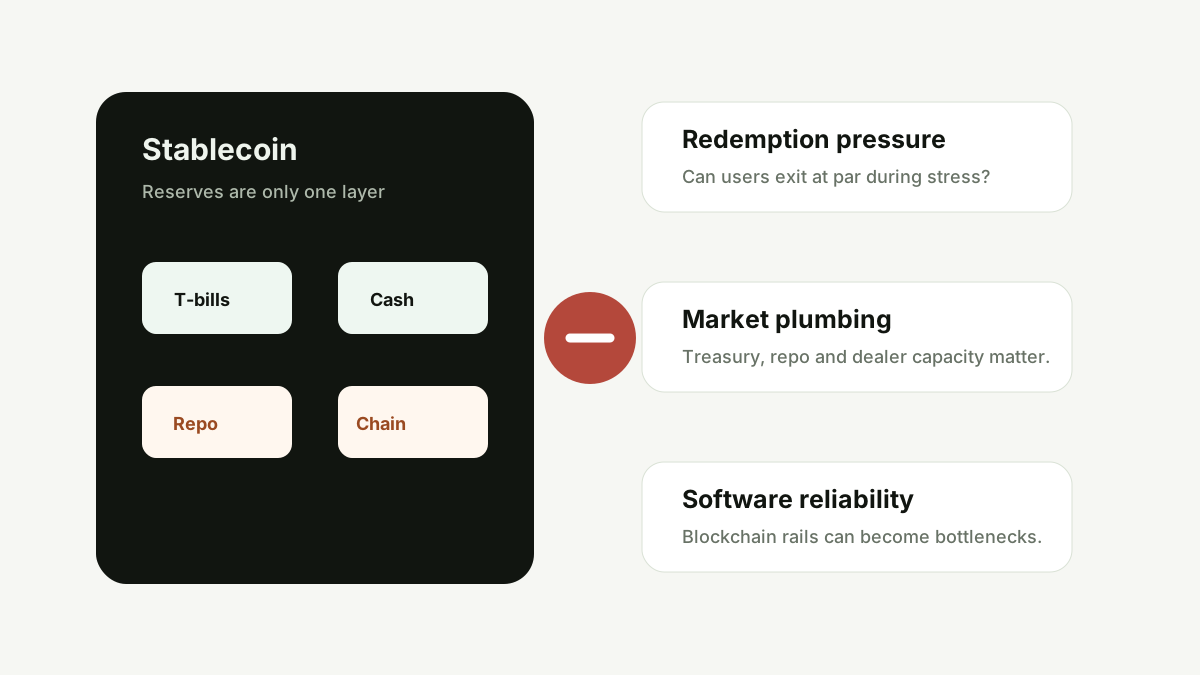
The GENIUS Act era makes stablecoins feel more regulated and institutional, but users should not reduce stablecoin risk to a single question: “is it backed?” Even conservatively backed stablecoins can face stress if many users redeem at once, if Treasury and repo markets become strained, if broker-dealer balance sheets are limited, or if blockchain rails become congested. The real user checklist is broader: reserves, redemption access, issuer transparency, market liquidity, supported chains and operational reliability.
Key takeaways
- Stablecoin backing matters, but it is only one layer of trust.
- Redemption rights can differ between retail users, exchanges, institutions and market makers.
- Short-term Treasuries are high-quality assets, but large redemption waves still need market plumbing.
- Blockchain congestion, bridge risk and issuer operations can affect stablecoin usability.
- Users should compare stablecoins like financial infrastructure, not just like ticker symbols.
Why this matters now
Stablecoins are moving deeper into payments, exchange settlement and traditional finance. The GENIUS Act gave the United States a federal framework for payment stablecoins, while banks, exchanges and fintech platforms are building products around tokenized dollars. That clarity is useful, but it can also create a false sense of simplicity.
A recent research paper, The Hidden Plumbing of Stablecoins: Financial and Technological Risks in the GENIUS Act Era, argues that par-value redemption can depend not only on reserve quality, but also on Treasury markets, repo markets, broker-dealer capacity and software governance. That is the kind of issue retail users rarely see until something breaks.
CryptoGuide take
Our view: stablecoins are becoming core crypto infrastructure, but the word “regulated” should not make users lazy. The safest habit is to ask what has to work behind the scenes for one token to stay redeemable for one dollar during stress.
What is stablecoin plumbing risk?
Stablecoin plumbing risk is the hidden dependency stack behind a token. It includes the assets backing the token, the institutions holding those assets, the market makers providing liquidity, the banks processing redemptions, the exchanges listing the token and the blockchains moving it between wallets.
| Layer | What users see | What to verify |
|---|---|---|
| Reserves | “Backed 1:1” | Reserve composition, attestations, custodian names and update frequency. |
| Redemption | Token price near $1 | Who can redeem directly, minimums, fees, timelines and blackout conditions. |
| Market liquidity | Deep exchange pairs | Spread, order-book depth, market-maker quality and stress behavior. |
| Banking rails | Fiat on/off-ramp | Bank partners, settlement hours, withdrawal limits and jurisdiction rules. |
| Blockchain rails | Fast transfers | Supported chains, bridge exposure, congestion, outages and smart-contract controls. |
Why high-quality reserves are not the whole answer
Short-term Treasuries and cash-like assets can be strong backing, but they still need to be converted, settled and moved through financial markets. If many holders redeem at once, the issuer may need market liquidity, dealer capacity and operational processes to work under pressure. That does not mean a stablecoin is unsafe; it means the user should understand the full redemption system.
What users should check before holding a stablecoin
- Read the issuer's reserve and attestation pages.
- Check whether you can redeem directly or only sell through an exchange.
- Compare liquidity across exchanges and chains.
- Understand whether the token exists on multiple networks and whether bridges are involved.
- Review freezing, blacklist and compliance controls.
- Do not keep all dollar exposure in one issuer, one exchange or one chain without understanding the risk.
Stablecoins vs tokenized deposits
As banks explore tokenized deposits, users will see more products that behave like digital dollars. Stablecoins usually involve a token issuer and reserve assets. Tokenized deposits are generally closer to bank liabilities represented on token rails. The user experience may look similar, but legal rights, redemption paths, deposit insurance assumptions and platform access can differ significantly.
Sources and further reading
- The Hidden Plumbing of Stablecoins: Financial and Technological Risks in the GENIUS Act Era
- S.1582 - GENIUS Act on Congress.gov
- Investopedia: How the GENIUS Act impacts U.S. dollar stablecoins
- CryptoGuide: Bank-issued stablecoins are reaching exchanges
FAQ
Can a regulated stablecoin still have risk?
Yes. Regulation and high-quality reserves can reduce some risks, but users still need to consider redemption rights, market liquidity, issuer operations, blockchain reliability and counterparty exposure.
What is stablecoin plumbing risk?
It is the financial and technical dependency stack behind a token: reserves, Treasury and repo markets, broker-dealer capacity, redemption workflows, blockchain networks and issuer operations.
What should users compare before holding a stablecoin?
Compare issuer transparency, reserve composition, attestations, redemption access, supported chains, exchange liquidity, fees, jurisdiction and what happens during market stress.
Conclusion
Stablecoins are becoming more important, not less. That makes deeper due diligence more important too. The next phase of stablecoin research is not only about which token trades closest to one dollar today. It is about which systems can keep working when the market is busy, stressed or fragmented.