
TLDR
MiCA's main EU transition deadline passed on July 1, 2026. ESMA's MiCA page shows the interim register was last updated on July 16, 2026, while national regulators have kept adding fresh warnings. On July 8, France's AMF said it had added 38 names to its 2026 list of unauthorized crypto websites and services. On July 6, Belgium's FSMA warned users about six unauthorized crypto-asset service providers and told consumers to verify firms in the CASP register. On July 15, FSMA said fraudulent trading platforms and crypto-linked scams still made up nearly half of its fraud reports, with more than EUR 8.5 million in reported consumer losses. The practical lesson is simple: if a platform says it is shutting down, migrating users, changing entities or asking for urgent withdrawal action, verify the exact legal entity and communication channel before moving anything.
Key takeaways
- July 1, 2026 was the key MiCA transition deadline for many existing crypto service providers in the EU.
- ESMA's interim MiCA register was last updated on July 16, 2026 and includes authorized CASPs plus non-compliant entities.
- On July 8, 2026 the AMF said it had added 38 names in 2026 to its unauthorized crypto-assets and digital asset services list in France.
- On July 6, 2026 the FSMA warned about six unauthorized crypto-asset service providers active in Belgium.
- On July 15, 2026 the FSMA said crypto-linked fraudulent trading platforms still represented nearly half of reported fraud cases and more than EUR 8.5 million in reported losses.
- Transition periods create urgency, and urgency makes fake support messages and impersonated regulator emails more effective.
- CryptoGuide Exchange is an independent research and comparison platform, not an exchange, broker, custodian, investment adviser or legal adviser.
What changed after MiCA's deadline
Before July 1, users could still see many platforms describing themselves as preparing for MiCA, applying for authorisation or operating under older national arrangements. After July 1, the line became harder: firms serving EU clients needed the relevant MiCA authorisation or a credible wind-down path. AMF's June 23 reminder said non-authorised providers should be able to transfer client crypto-assets to an authorised CASP or to a self-hosted wallet with prior notice to clients.
That operational transition matters because it creates the exact conditions scammers like: account anxiety, short deadlines, changing legal entities, unfamiliar support instructions and users who are afraid of losing access if they wait too long. A rule change that improves the market long term can still create a short-term scam window.
Who is affected
The highest-risk group is ordinary EU users with balances on smaller or less transparent platforms, especially if those platforms are changing service terms, restricting countries, asking users to migrate to a new entity or sending notices about withdrawals. Users of larger brands are not immune either. A convincing fake migration or compliance message can target any brand once market conditions make the story believable.
The issue is broader than one exchange. It also touches wallet addresses, identity documents, support tickets and email trust. AMF's blacklist pages currently include "AMF Usurpation" entries, which is a concrete reminder that impersonating a watchdog is part of the live threat picture, not just a theoretical concern.
Practical explanation: how the attack flow works
A user hears that MiCA has forced some platforms to stop EU activity or migrate customers. Soon after, a message appears claiming to come from exchange support, a compliance team or even a regulator. The message says the user must verify ownership, move funds to a safe wallet, re-KYC with a linked portal or click through to complete a transfer before a deadline. The fake site looks plausible because the larger regulatory story is real.
The danger is that the scam does not need to invent a crisis from scratch. It borrows a real deadline, a real regulatory acronym and a real sense of user confusion. That makes sloppy but believable instructions much more effective than they would be in a calm market.
| Real transition signal | Healthy interpretation | Scam version to reject |
|---|---|---|
| The platform mentions MiCA entity changes | Verify the exact legal entity in ESMA's register and on the platform's official terms page. | A chat message or email tells you to move funds immediately to a new address. |
| A regulator publishes unauthorized-provider warnings | Check the regulator website directly and compare the listed domain or company name carefully. | An email claims the regulator is holding your assets or directing you to a rescue wallet. |
| An exchange announces a wind-down | Use only the exchange's official domain, app and published support flow. | A lookalike site asks for seed phrases, 2FA codes or wallet signatures to unlock withdrawals. |
| You receive a migration notice | Confirm the notice through the logged-in account dashboard and public status or help pages. | The notice uses urgency, shortened links or a sender domain that differs from the official one. |
Decision checklist before you act
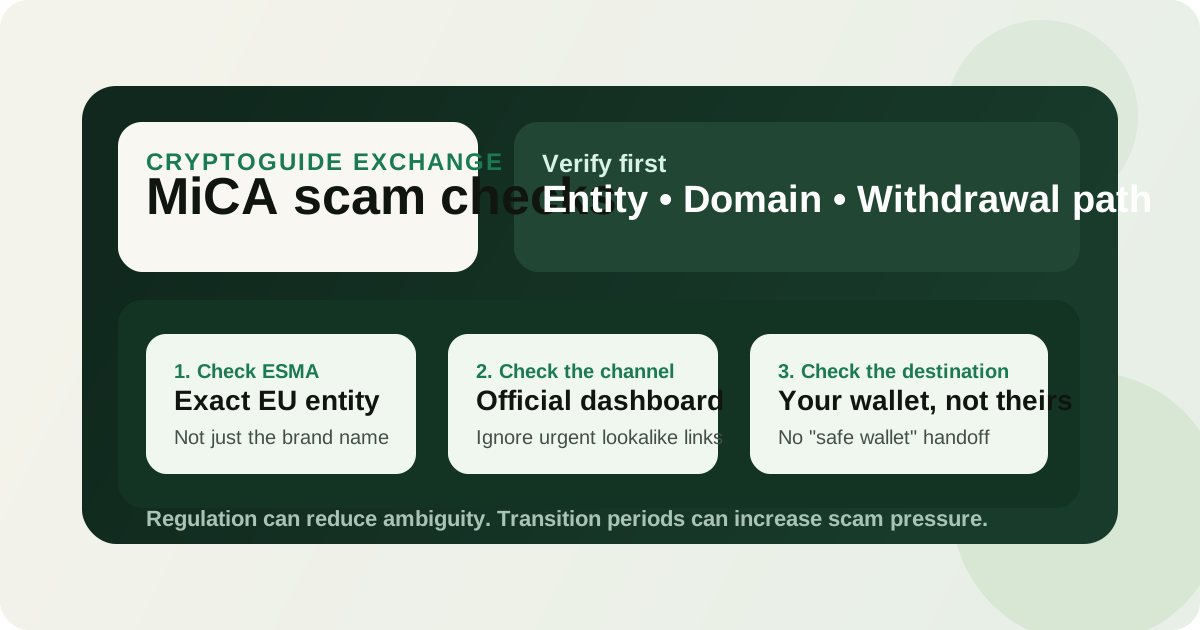
- Check ESMA's MiCA register for the exact legal entity, not only the consumer-facing brand.
- Check your exchange account dashboard directly for matching notices before trusting any email, Telegram message or SMS.
- Check whether the sender domain, help-center link and withdrawal instructions match the exchange's official site character for character.
- Check local regulator warning pages if the platform serves France, Belgium or other EU markets where national supervisors publish blacklists and alerts.
- Check whether the message asks for something a legitimate exchange should not request, such as a seed phrase, wallet private key, recovery words or transfer to a "safe" external wallet controlled by them.
- Check whether the platform is asking for a move to a self-hosted wallet you control, or to an address controlled by someone else. That difference is everything.
- Check whether you can withdraw a small test amount through the normal in-app flow before making a larger move.
Comparison: stronger vs weaker trust signals
| Question | Stronger signal | Weaker signal |
|---|---|---|
| Is the provider really authorised? | The legal entity appears in ESMA's MiCA register and the platform terms point to the same entity. | The app homepage says "MiCA aligned" or "EU compliant" without naming the serving entity. |
| Is the migration notice real? | The same notice appears in the logged-in account area and public help documentation. | The notice appears only in email or a social message with an urgent deadline. |
| Are regulator references credible? | The regulator's own website contains the warning or guidance. | The message uses regulator logos or names but sends you to a third-party form or wallet. |
| Is the withdrawal path safe? | You are moving funds through the normal platform flow to a wallet or exchange account you control. | You are told to send funds to a temporary holding wallet for "verification" or "asset protection." |
| Does the support interaction feel legitimate? | Support tells you to verify through official in-app tools and published URLs. | Support pushes you into calls, remote access, copy-paste commands or one-time secret sharing. |
Risk notes
A blacklist is a warning tool, not a complete map
AMF and FSMA both make clear that their lists are not exhaustive. That means "not listed yet" is not the same as safe. A new domain can appear before a regulator adds it to a warning page.
Brand familiarity does not remove entity risk
A known exchange brand can still serve different customers through different entities, and a scammer can exploit that complexity. If the legal entity, geography and product scope are vague, the risk of confusion rises.
Fast action is sometimes necessary, but fast action still needs channel control
If a provider is genuinely winding down, waiting forever is not the solution. The safer rule is to move quickly only through verified channels you opened yourself.
CryptoGuide take
The trust-first reading of MiCA is not that Europe has solved crypto risk. It is that the next wave of risk is more operational and more social-engineering-heavy. When authorisation rules tighten, bad actors shift from broad hype to targeted confusion: fake migrations, fake regulator notices, fake support and fake urgency. Users should treat every wind-down or transfer instruction as a verification exercise first and a transaction second.
FAQ
What changed for EU crypto users after July 1, 2026 under MiCA?
After July 1, 2026, crypto-asset service providers serving EU clients needed MiCA authorisation or an orderly wind-down. That made unauthorized providers, rushed transfer messages and fake compliance instructions more important trust risks for users to check.
How can I verify whether a crypto exchange is authorized in the EU?
Start with ESMA's MiCA register, then confirm the exact legal entity, not only the brand name. After that, compare the exchange's support emails, withdrawal instructions and country-specific terms against the official website and local regulator warnings.
What is the main scam risk during an exchange wind-down or migration?
The main risk is acting on urgency without verifying the source. Fake support agents, lookalike domains and impersonated regulator messages can push users to send funds to the wrong wallet or hand over account access during a stressful transition.
Conclusion
As of Tuesday, August 11, 2026, the post-MiCA trust problem is no longer only "which exchanges have authorisation?" It is also "who is trying to exploit the transition?" EU users should check the entity, the domain, the withdrawal path and the message source every time a platform claims that regulation requires urgent action.
Related pages
- MiCA after July 1, 2026: what EU crypto exchange users should check
- ESMA custody resilience sweep: what EU crypto exchange users should check
- How to verify a legitimate exchange
- How to avoid crypto scams
- Crypto Trust Checker