
TLDR
Coinbase said its July 14, 2026 incident started when automated failover shifted traffic to a database environment with stale read replicas. The company later said the issue caused roughly three hours of degraded performance and affected consumer products, APIs and some institutional flows before recovery. This was not presented as a hack or custody failure. The trust-first lesson is different: if an exchange wants to be treated like market infrastructure, users should judge outage handling, status transparency and recovery design almost as carefully as wallet security.
Key takeaways
- Coinbase published a postmortem on July 21, 2026 describing the July 14 event as a reliability failure tied to automated failover and stale read replicas.
- Coinbase Status said the incident affected multiple platforms, with spot trading, advanced trading, deposits, withdrawals, card services and developer APIs showing degraded performance during the event window.
- Coinbase said customer funds remained safe, but access, execution and account actions were disrupted for part of the day.
- For users, this is an exchange-trust story about resilience, not only a technical engineering story.
- CryptoGuide Exchange is an independent research and comparison platform, not an exchange, broker, custodian, investment adviser or legal adviser.
What happened on July 14, 2026
Coinbase's status page flagged degraded performance on Monday, July 14, 2026 across multiple products. The incident page showed user-facing impact on consumer features and developer access, including spot trading, advanced trading, transfers, card features and APIs. On Tuesday, July 21, 2026, Coinbase published a formal postmortem saying the issue began when automated failover redirected traffic to an unhealthy database cluster with stale read replicas.
The timing matters because July 14 and July 21 are distinct dates. The outage happened on July 14, 2026. Coinbase's written explanation came one week later on July 21, 2026. That gap is normal for postmortems, but users should separate the live incident from the later explanation when judging platform transparency.
How the outage flow worked
- An automated failover mechanism rerouted production traffic during a problem condition.
- The destination database environment had stale read replicas, which produced inconsistent or invalid responses.
- Those failures cascaded into degraded performance across retail interfaces, APIs and some institutional services.
- Coinbase recovered service during the same day and later published a postmortem with remediation steps.
- The practical user risk was not coin theft. It was loss of timely access during a period when users might have needed to trade, transfer or verify balances.
Why this matters for exchange users
Crypto platforms increasingly present themselves as full-service market infrastructure. That means users are not only trusting custody and compliance. They are trusting system availability, order routing, balance accuracy, failover design and incident communication. A database-layer error can still become a real user problem if it blocks withdrawals, distorts balances or prevents traders from managing positions in time.
This is especially relevant for users who keep assets on one platform, rely on API trading, use exchange-issued cards or need predictable fiat on-ramp and off-ramp access. A three-hour disruption may sound short in engineering terms. In trading terms or payment terms, it can be the entire critical window.
Practical user checklist after a high-profile exchange outage
| Check | Why it matters | What to verify |
|---|---|---|
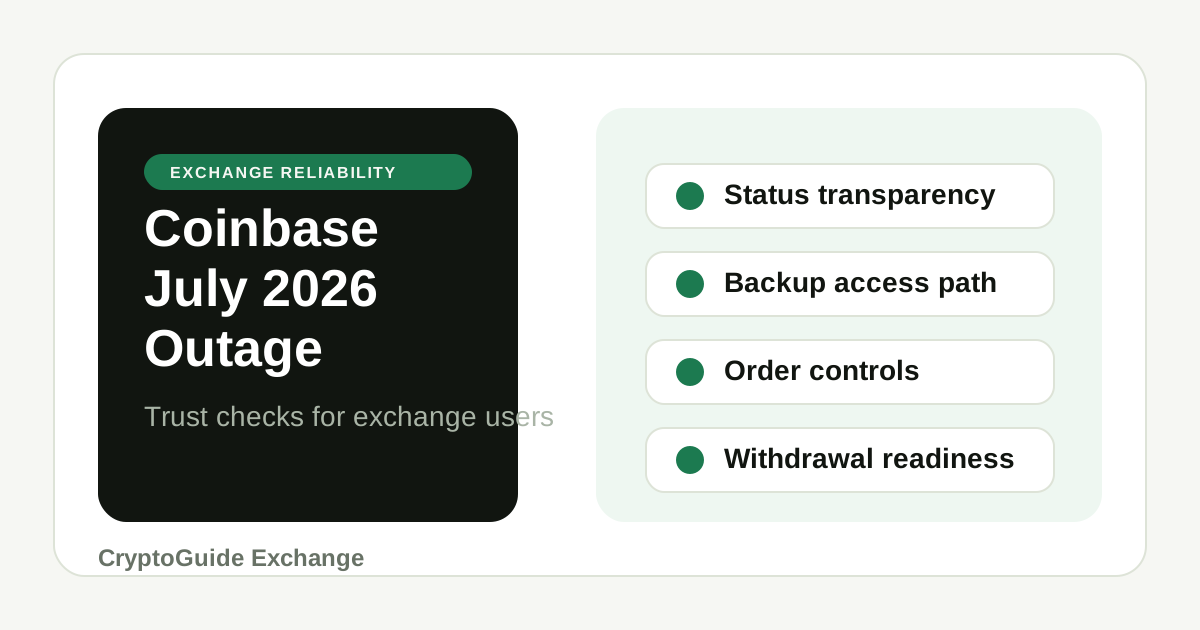
| Status transparency | You need fast, specific impact updates during incidents. | Check whether the platform keeps a public status page with timestamps, product-level impact and postmortems. |
| Access concentration | Single-platform dependence increases outage risk. | Know whether you have a backup venue, bank rail or wallet path if the main app fails. |
| Order controls | Outages can leave users unable to cancel or manage risk. | Review how the platform handles open orders, liquidations and delayed executions during degraded service. |
| Withdrawal readiness | Access problems matter most when funds cannot move. | Test withdrawal allow-listing, address books and alternative custody paths before an incident happens. |
| API dependence | Bot and professional workflows can break silently. | If you trade by API, check incident-history patterns and fallback logic rather than assuming uptime. |
| Card and cash-out exposure | Exchange outages can affect everyday spending and off-ramps too. | Keep a secondary payment or withdrawal route if you use exchange-linked cards or stablecoin exits. |
Comparison: security breach vs reliability outage
| Scenario | Main risk | User priority | What to watch |
|---|---|---|---|
| Security breach | Unauthorized access, theft, data exposure or impersonation. | Lock accounts, rotate credentials, verify communications and assess custody risk. | Incident scope, affected data, reimbursement policy and account-protection tools. |
| Reliability outage | Loss of access, delayed orders, blocked transfers or inaccurate balances. | Preserve optionality, avoid panic actions and verify which services still work. | Status transparency, product-level impact, recovery speed and future prevention steps. |
Risk notes users should not miss
Funds can stay safe while user risk still rises
A platform can truthfully say customer funds are safe and still create acute user stress if balances appear wrong, trading goes dark or withdrawals stall. Safety and availability are related but not identical trust dimensions.
Automated failover is only as good as the fallback environment
The postmortem detail that matters most is not the word failover. It is that the fallback path itself was unhealthy. Users do not need to judge the database architecture, but they should understand that redundancy does not guarantee a clean switchover.
Outage history should influence custody habits
Users who hold long-term assets on an exchange should ask a simple question: if the app is degraded during a volatile day, do I still have enough control over my funds and my decisions? If the answer is no, custody concentration may be too high.
What Coinbase said it changed
Coinbase's July 21 write-up said the company added stronger safeguards around failover, stale-replica detection and validation of the target environment before shifting traffic. Those are sensible fixes and exactly the kind of specific remediation users should want to see. Vague language about resilience improvements is weaker than a postmortem that names the failure mode and the control changes.
CryptoGuide take
The calm reading is that Coinbase did the right thing by publishing a dated postmortem with a concrete failure explanation. The stricter reading is that exchange trust should include operational resilience, not just security branding. If a platform markets itself as core crypto infrastructure, users should expect clear incident timelines, product-level status visibility and evidence that failover design has been tested under real pressure.
FAQ
What caused Coinbase's July 14, 2026 outage?
Coinbase said an automated failover moved traffic to a database cluster with stale read replicas, which caused errors and degraded performance across consumer products, APIs and some institutional services.
Was the July 2026 Coinbase incident a hack or a funds-loss event?
No. Coinbase's postmortem describes the event as an internal reliability failure, not a wallet breach. The company said customer funds remained safe while availability and order handling were disrupted.
What should exchange users check after a major outage?
Users should review the exchange's status transparency, incident history, backup access paths, order controls, custody plan and whether they can move assets or wait out a disruption without taking forced action.
Conclusion
The July 14, 2026 Coinbase outage is useful because it highlights a quieter part of exchange trust: operational reliability. A platform does not need to be hacked for users to feel real risk. Before relying heavily on any exchange, check how it handles outages, how clearly it communicates product impact and whether your own setup still works when the main app does not.
Related pages
- Coinbase support-agent breach: what exchange users should do
- Coinbase exchange review
- How crypto exchanges work
- How to store crypto safely
- CryptoGuide methodology