
TLDR
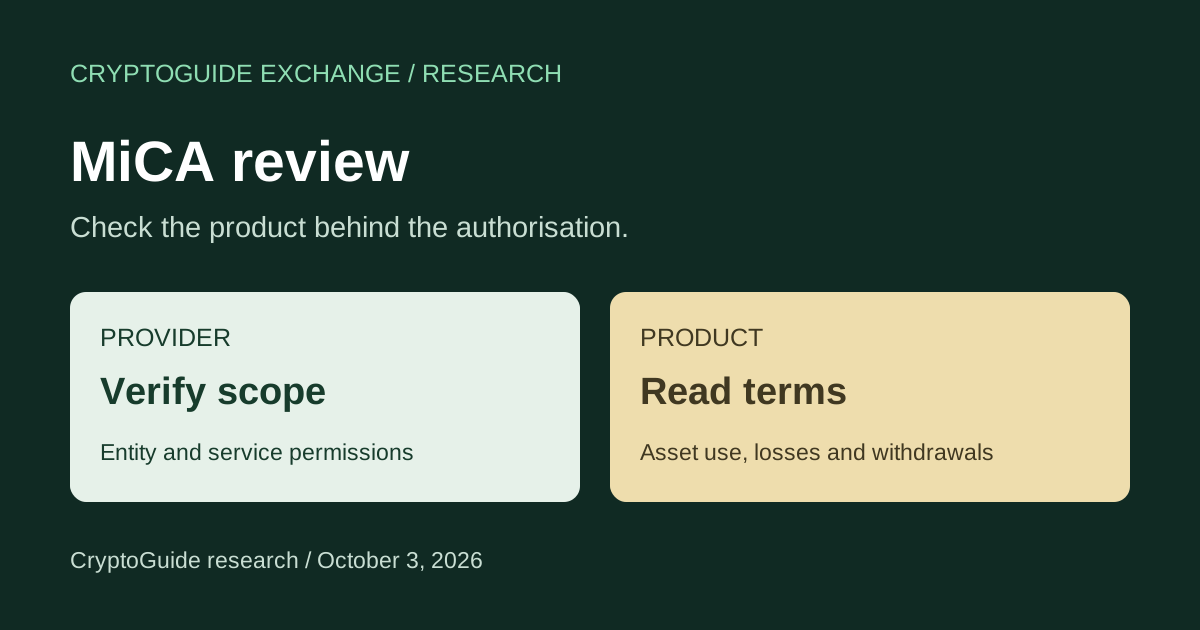
A regulated exchange can offer a familiar interface to an unfamiliar risk. On September 30, 2026, ESMA recommended changes to the Markets in Crypto-Assets Regulation (MiCA), including safeguards for staking, lending and borrowing. These are recommendations to the European Commission, not newly enacted rules. For users comparing yield features, the useful distinction is between the platform’s authorisation and the mechanics of the product. ESMA announcement
Key takeaways
- Read the September 30 publication as a policy direction, not a new product guarantee.
- Separate the exchange account, the yield arrangement and any underlying protocol.
- Compare loss allocation and exit conditions before comparing advertised rewards.
What changed: ESMA wants the rulebook to catch up
ESMA’s review response calls for clearer cost information, stronger controls on marketing by influencers and third parties, and proportionate disclosures for staking, lending and borrowing. It also recommends clearer criteria for genuinely decentralised activity and a regulated service for firms giving clients access to DeFi. The announcement identifies gaps in protection; it does not announce an implementation deadline for these recommendations. September 30 recommendations
The detailed response, reference ESMA75-113276571-1721, describes exchange interfaces that route users into lending protocols, staking, liquidity provision and other yield strategies. Its proposed gateway obligations would include explaining protocol selection, managing conflicts, checking protocols and maintaining operational safeguards. ESMA says requirements should reflect how much control the intermediary exercises. Review response, section 3.4
Who is affected: users crossing from an account into a product
This matters to EU users who access staking or lending through a crypto-asset service provider (CASP), as well as people using an exchange interface to reach DeFi. It is not a claim that any named exchange is breaching the rules. The review offers no basis for declaring all yield services newly authorised or prohibited.
A useful starting point is ESMA’s MiCA register. Match the legal entity in your account agreement to the provider entry, then check the relevant service information. A brand name alone is insufficient. ESMA also warns that listed crypto-asset white papers have not been reviewed or approved by a competent authority. A token document and a provider authorisation answer different questions. ESMA register and scope notes
Risks: the reward number leaves out the exit
The EBA–ESMA factsheet distinguishes lending arrangements from staking that supports proof-of-stake consensus. It identifies liquidity and liquidation risks in lending, price exposure during staking lock-up or unbonding periods, and uncertainty over how penalties are passed to users. It also flags custody failures, commingled assets and weak records. These are structural risks, not evidence of an incident at a particular provider. EBA–ESMA lending and staking factsheet
CryptoGuide’s reading is that an easy opt-in screen deserves a harder exit check. A button labelled “withdraw” may start a queue rather than deliver immediately available assets. Ask what happens if demand for exits rises, the underlying protocol pauses, or the provider cannot fulfil its obligation. A normal small withdrawal can test the routine workflow; it cannot prove availability during stress.
Compare the arrangement behind the label
The questions below are our editorial comparison framework, not a statement that every product has the same legal treatment.
| Feature presented to users | Find in the terms | Decision check |
|---|---|---|
| Staking | Validator role, reward deductions, unbonding and penalty allocation | Can you explain the waiting period and who absorbs a penalty? |
| Lending or an Earn balance | Borrower or counterparty, asset-use rights, repayment and suspension terms | Is repayment dependent on another party returning assets? |
| DeFi access inside an exchange | Protocol name, contract permissions, routing and provider responsibilities | Can you identify where platform support ends and protocol exposure begins? |
| Ordinary custody balance | Custodian, segregation, withdrawal process and permitted asset use | Does enabling the extra feature change these terms? |
Decision checklist before opting in
- Save the agreement. Record its date, the legal entity and the product name. Keep the product supplement alongside the account terms.
- Map the asset path. Write down whether the asset stays in custody, goes to a borrower, is staked, or enters a smart contract. An unclear path is a reason to seek clarification.
- Request a fee example. Ask how provider deductions, protocol charges and exit costs affect the amount returned. Check whether the displayed rate is variable and before or after fees.
- Read the delay clauses. Locate normal waiting periods, exceptional suspensions and any limits on partial withdrawals.
- Find the loss clause. Identify who bears validator penalties, borrower default or a protocol failure, and what any stated reimbursement promise excludes.
- Confirm support and records. Find the official dispute route and how to export balances and transactions. Do not rely on a promoter’s explanation of your rights.
CryptoGuide take
ESMA’s review puts attention where exchange comparisons often stop: the service behind the button. Authorisation is an important starting check, but it cannot substitute for understanding asset use, fees and repayment. We would give more weight to a clear explanation of losses and withdrawals than to a prominent reward rate or a broad “regulated” badge.
FAQ
Did ESMA introduce new staking rules on September 30?
No. ESMA published recommendations for the European Commission’s MiCA review. The response itself does not enact the proposed changes.
Does an exchange’s MiCA authorisation approve every Earn product?
Do not infer product approval from the exchange’s status. Identify the contracting entity, the service being provided and the terms for the specific product.
What should users check before enabling a yield feature?
Check where assets go, who can use them, how fees are charged, when withdrawals can be delayed and who bears losses. Keep a copy of the applicable terms.
Conclusion
Use the MiCA review as a prompt to inspect existing product terms. Establish the entity, asset path, costs and exit conditions before enabling a feature. Future safeguards should be assessed when their final text and application dates are available.
Related pages
- Crypto regulation and geographic access
- Exchange security comparison
- CryptoGuide Trust Checker
- Wallet research
Sources
Primary sources reviewed October 3, 2026. The September 2026 response supplies the current policy development; the 2025 factsheet supplies risk background. Checklists and editorial views are CryptoGuide analysis.
- ESMA: September 30 MiCA review announcement
- ESMA: response to the Commission’s MiCA consultation
- EBA–ESMA: lending and staking factsheet
- ESMA: MiCA register and explanatory notes
CryptoGuide Exchange is an independent research and comparison platform, not an exchange, broker, custodian, investment adviser or legal adviser. This is educational research, not investment or legal advice.